3 Common Money Myths You Should Stop Believing
Let’s break down three common money myths that could be affecting the way you save, spend, and build wealth.

1. You Need an 800 Credit Score to Be Financially Healthy
People treat credit scores like a video game where the goal is to keep leveling up until they finally reach 850.
But once your credit is already strong, obsessing over a perfect score doesn’t necessarily give you any extra benefits.
Here’s what matters:
Your credit score isn’t your net worth.
It’s a financial tool, not a measure of how wealthy you are.
Focus on paying your bills on time, managing debt responsibly, and avoiding unnecessary borrowing.
You don’t need a perfect credit score to build real wealth.
2. Buying Something on Sale Always Saves You Money
Here’s one that might hurt.
A sale doesn’t automatically mean you’re saving money.
If you weren’t planning to buy something until you saw a 40% discount, you didn’t save 40%.
You spent the other 60%.
Amazon Prime Day and other big sales events work because they create urgency.
Suddenly, something you didn’t need yesterday feels like something you can’t afford to miss.
Before buying something on sale, ask yourself:
- Was I planning to buy this before seeing the discount?
- Is it already in my budget?
- Have I checked whether the sale price is actually a good deal?
3. Time Is Always Money

You’ve probably heard the phrase “time is money.”
And sometimes it’s true.
But that doesn’t mean every convenience purchase is a smart financial decision.
For example, paying extra to have lunch delivered might save you 20 minutes.
But are those 20 minutes actually generating income or giving you something you genuinely value?
If not, you might just be spending more money.
Meal planning, cooking in bulk, and preparing ahead can sometimes save you both time and money.
The goal isn’t to avoid paying for convenience.
It’s to make sure you’re spending intentionally rather than using “time is money” as an excuse for purchases you haven’t thought through.
The Bottom Line: Not All Advice is for YOU
Building wealth doesn’t require following every financial trend or chasing every money rule you see online.
The fundamentals still matter:
- Spend intentionally
- Avoid unnecessary debt
- Save consistently
- Invest for the long term
- Understand where your money goes.
You don’t need to follow every piece of financial advice to become financially successful.
You need a plan that works for your life.
Want more practical money advice? Join The Frugal Rich Network to learn from financial experts and connect with people working toward the same goals.
Disclaimer: This article is for educational and entertainment purposes only and is not personalized financial advice.
About JC Rodriguez
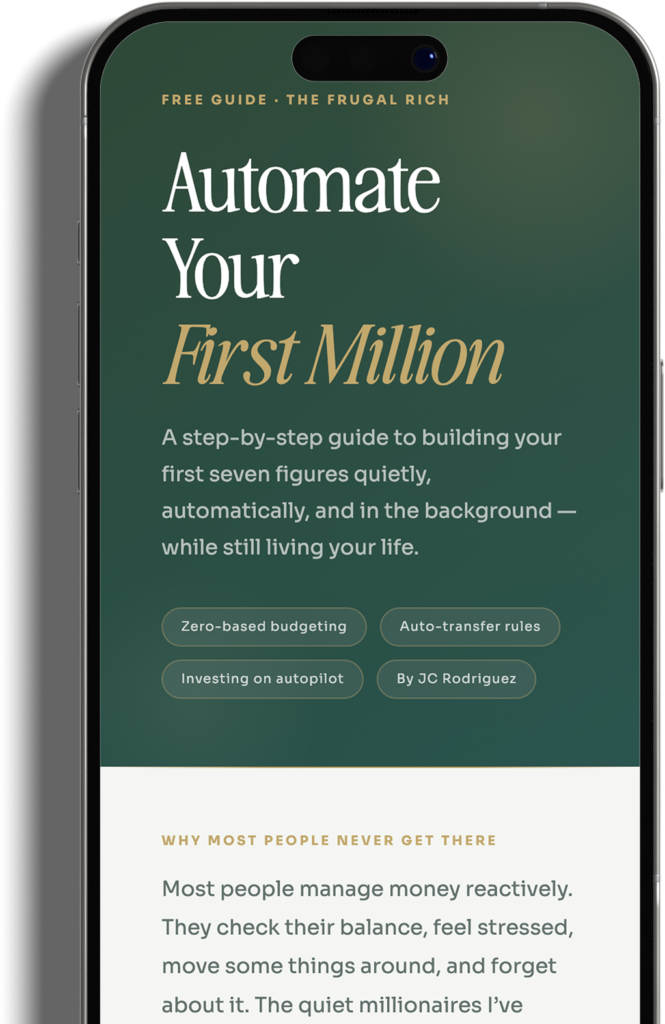
Hey! I’m JC Rodriguez, founder of The Frugal Rich and media personality. I’m passionate about helping everyday people build real wealth quietly, without the flashiness or get-rich-quick nonsense. I’ve spent years traveling across the country interviewing everyday Americans who built 7-figure net worths on normal incomes, and I share everything I learn every Friday in my free newsletter. I’ve been featured in NerdWallet, Business Insider, The Washington Post, and Fox Business. Learn more here.